

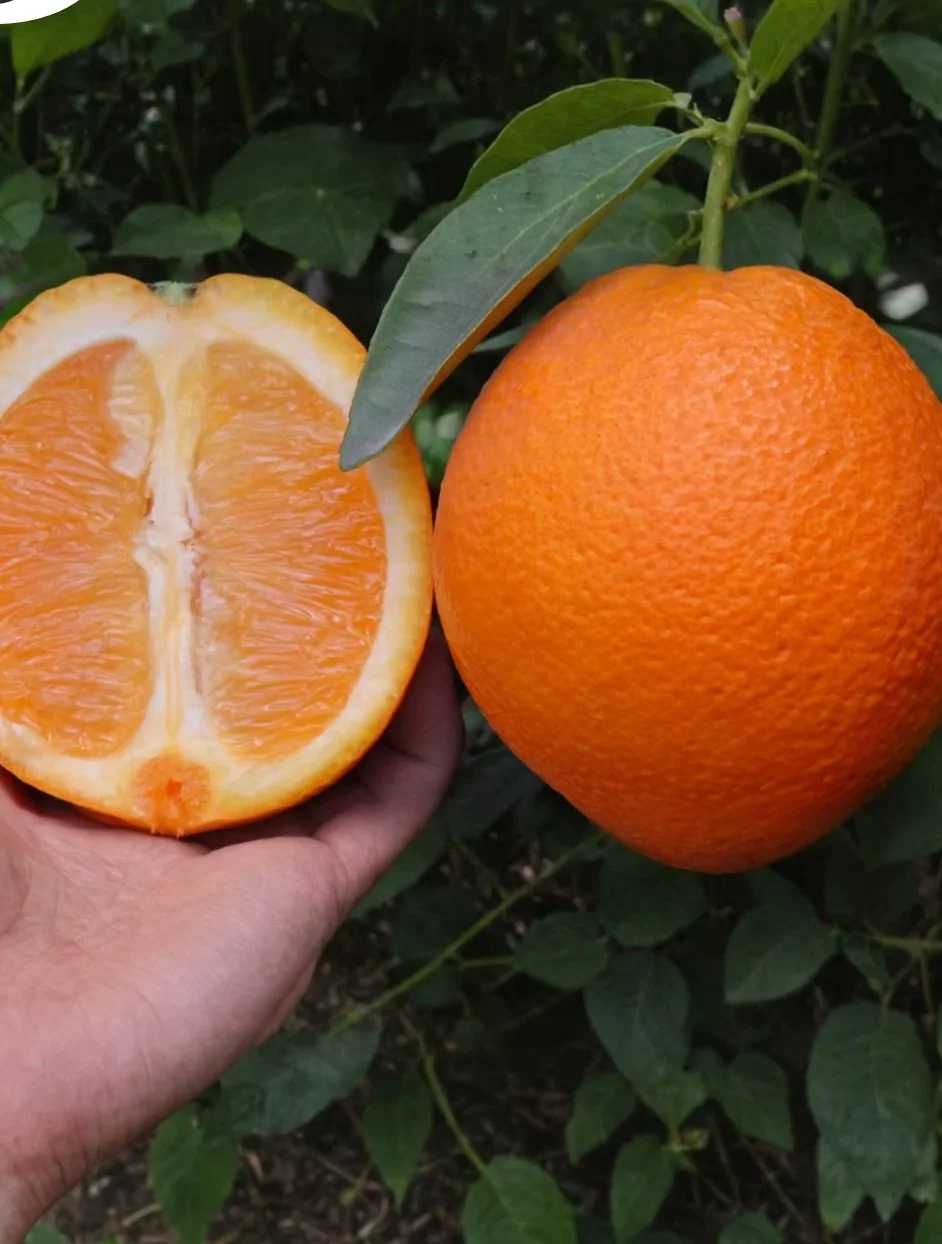
The Late Lane navel orange tree is one of the original late-season navel varieties, extending the harvest window for premium-quality oranges well beyond traditional navels like Washington or Fisher. This variety is able to maintain exceptional fruit quality into early summer months when most navels have already dropped in sweetness and texture. The fruit is large, bright, and seedless, with the classic rich flavor and low acidity that consumers expect from top-tier navels. Its peel is smooth and easy to remove, making the Late Lane both a grower’s and a marketer’s favorite for consistent quality late in the citrus season.
In orchard settings, the Lane Late navel orange tree performs best in warm inland valleys where heat accumulation promotes high sugar content and deep orange rind coloration. It thrives in well-drained sandy loam soils and responds favorably to balanced irrigation schedules that prevent fruit puffiness or creasing—common issues in older navel varieties held late on the tree. Trees exhibit strong vigor with a rounded canopy and moderate thorn presence, producing high yields with uniform fruit size. Compared to Washington or Atwood navels, Lane Late offers significantly longer tree-hang potential, allowing fruit to be held into May or even June in some areas without granulation or loss of internal quality.
The Late Lane navel orange tree is one of the original late-season navel varieties, extending the harvest window for premium-quality oranges well beyond traditional navels like Washington or Fisher. This variety is able to maintain exceptional fruit quality into early summer months when most navels have already dropped in sweetness and texture. The fruit is large, bright, and seedless, with the classic rich flavor and low acidity that consumers expect from top-tier navels. Its peel is smooth and easy to remove, making the Late Lane both a grower’s and a marketer’s favorite for consistent quality late in the citrus season.
In orchard settings, the Lane Late navel orange tree performs best in warm inland valleys where heat accumulation promotes high sugar content and deep orange rind coloration. It thrives in well-drained sandy loam soils and responds favorably to balanced irrigation schedules that prevent fruit puffiness or creasing—common issues in older navel varieties held late on the tree. Trees exhibit strong vigor with a rounded canopy and moderate thorn presence, producing high yields with uniform fruit size. Compared to Washington or Atwood navels, Lane Late offers significantly longer tree-hang potential, allowing fruit to be held into May or even June in some areas without granulation or loss of internal quality.